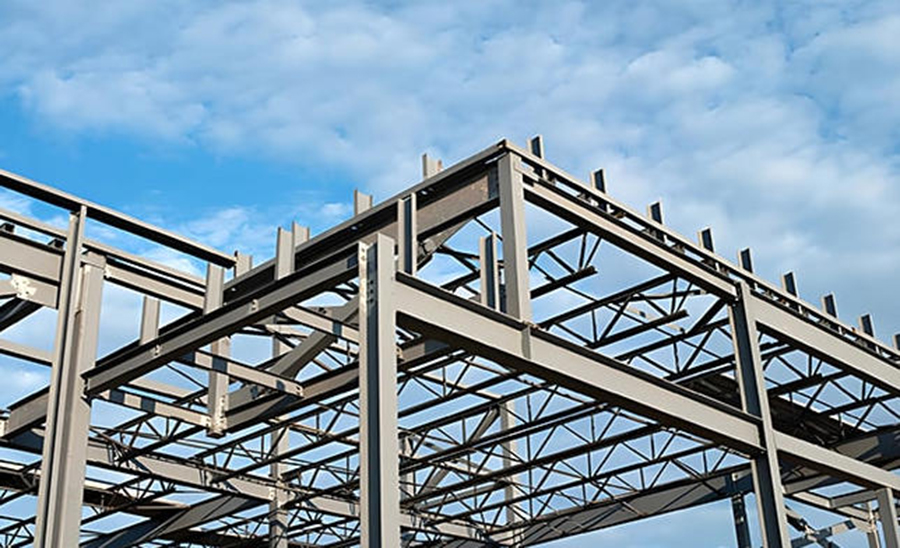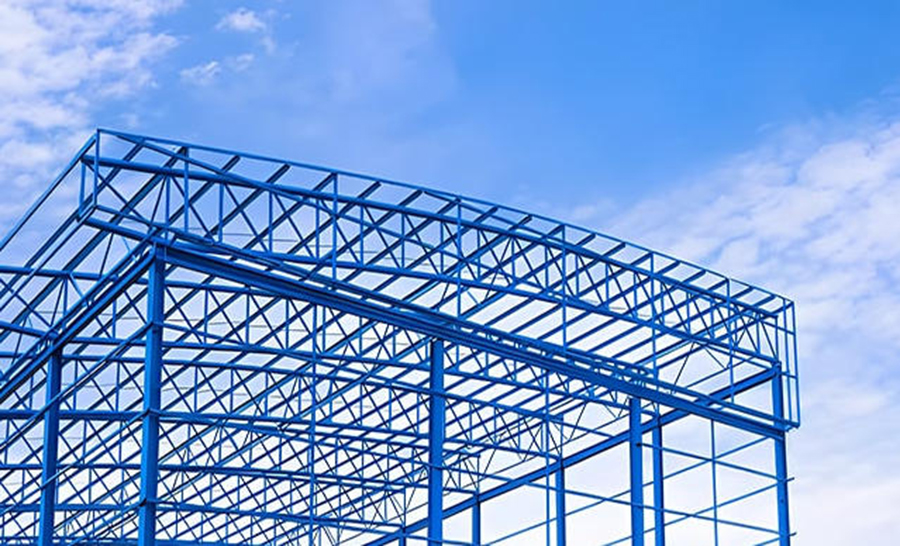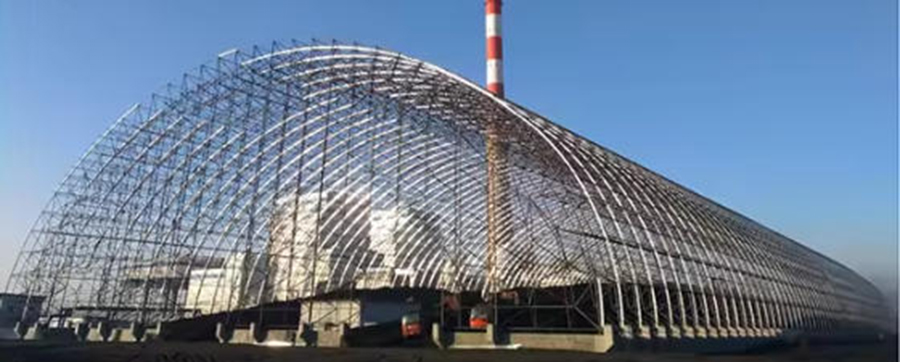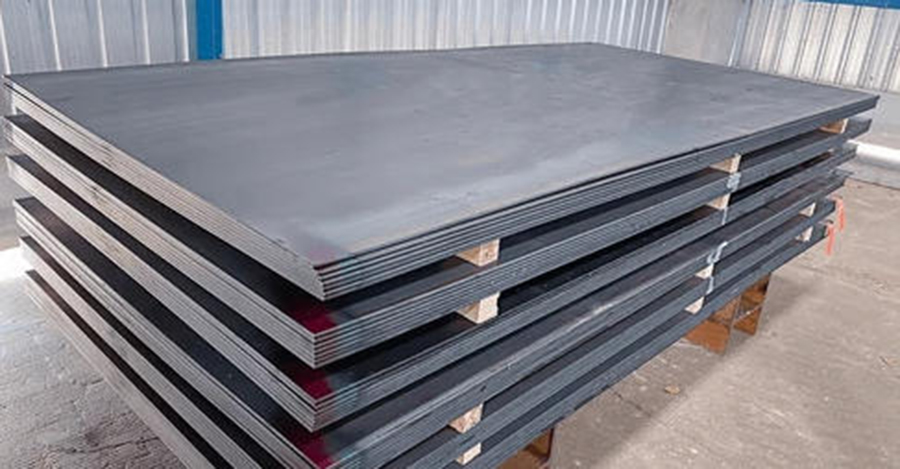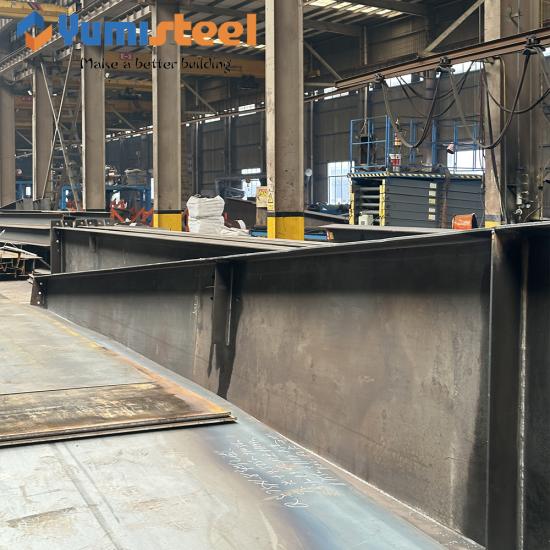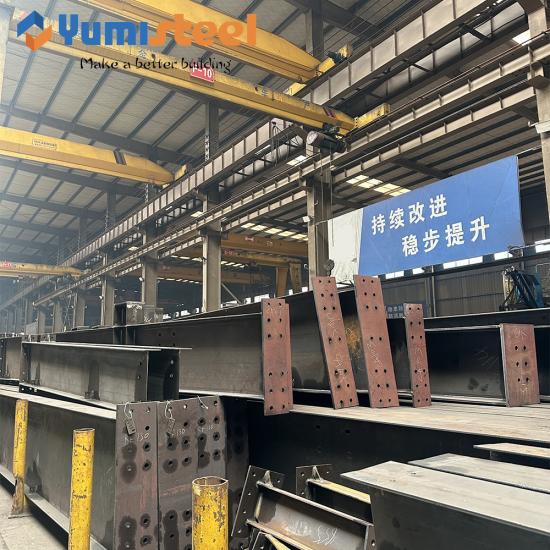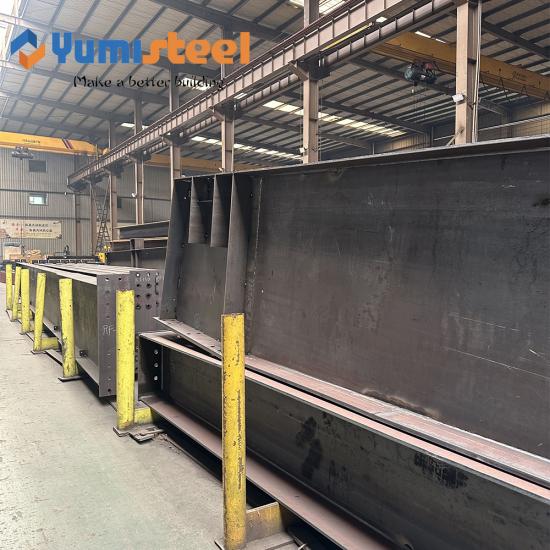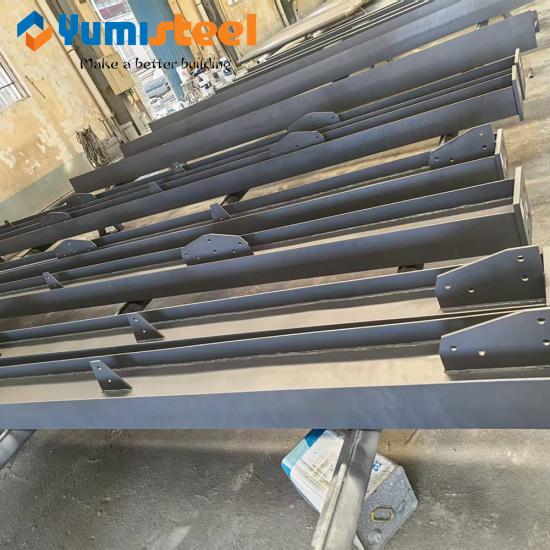

Steel structures are high-strength, lightweight building systems used widely in industrial and civil construction. Based on stress characteristics, they fall into four types: frame structures (rigid beam-column connections), truss structures (triangular members for large spans), shell structures (curved thin plates using membrane effect), and plate structures (box-shaped or ribbed steel plates for special loads). Understanding these four types is essential for proper steel structure selection.

Frame Structures
Frame structures consist of steel columns and beams connected by rigid or hinged joints, forming a multi-story or multi-span load-bearing system. Vertical loads are transferred from the beams to the columns, and then to the foundation; horizontal loads are resisted by the beam-column joints and the bracing system. Frame structures offer flexible floor plan layouts, high space utilization, and excellent seismic performance, making them the preferred choice for high-rise office buildings, hotels, hospitals, schools, and residential buildings. Depending on the seismic resistance level, they can be divided into pure frame, braced frame, and eccentrically braced frame structures, often used in conjunction with concrete core tubes for super high-rise buildings.

Truss Structures
Truss structures consist of a triangular or trapezoidal force grid formed by upper chords, lower chords, and web members. All members primarily bear axial tension or compression, with minimal bending moments. This force distribution method fully utilizes the strength of steel, resulting in material savings, high stiffness, and minimal deformation. Truss structures are suitable for large-span roofs and floors, commonly found in stadiums, theaters, airport terminals, railway station waiting halls, large factories, and bridge projects. Planar trusses can achieve spans of 30 to 60 meters, while spatial trusses can even exceed 100 meters, facilitating the passage of pipelines and equipment.

Shell Structures
Shell structures are steel structures in the form of curved thin plates. They utilize the internal forces of the curved membrane to bear external loads, featuring rational force distribution, high stiffness, and material savings. Common shell structures include cylindrical shells, spherical shells, and hyperbolic paraboloid shells. Because steel can be machined into various curved surfaces, shell structures offer aesthetically pleasing designs and strong spanning capabilities, making them widely used in large stadiums, exhibition centers, storage silos, oil tanks, and gas holders. Shell structures require high construction precision but are highly distinctive once completed.

Plate structures
Plate structures are solid or hollow load-bearing members composed of steel plates. Common forms include steel plate shear walls, box girders, ribbed floor slabs, and composite steel plate structures. These structures rely on the bending, shear, and in-plane stiffness of the steel plates to bear loads. They are mainly used in lateral force resisting systems of high-rise buildings, steel box girders of bridges, crane beams in heavy industrial plants, and special projects such as docks and gates. Plate structures offer good overall integrity and high load-bearing capacity, but consume relatively more steel, making them suitable for applications with strict requirements for stiffness and stability.
|
Structure Type |
Suitable For |
Example Applications |
|
Frame Structure |
Main load-bearing systems of multi-story and high-rise buildings |
Office buildings, residences, hotels |
|
Truss Structure |
Large-span roofs and floors |
Stadiums, airports, factories |
|
Shell Structure |
Roofs requiring large spaces and aesthetically pleasing designs |
Exhibition centers, storage silos |
|
Plate Structure |
Special applications requiring high rigidity and load capacity |
Shear walls, bridge box girders, heavy-duty crane beams |
Selecting the right steel structure boosts construction speed, safety, and long-term savings. Frame, truss, shell, and plate structures each solve different problems in modern buildings,knowing their strengths helps you deliver the best results, especially on complex commercial, industrial, or infrastructure projects.
For more information needed or any inquiry,please feel free to contact Yumisteel team.
オンラインサービス
+86-592-6095031
manager@yumisteel.com
Alina_Yuki
+8613559086380
+8615860744964