
banner

業界ニュース

ホーム /ニュース /業界ニュース /

Steel Structure Manufacturing Process:Cutting and Blanking

新製品

Steel Structure Manufacturing Process:Cutting and Blanking

2026-04-30

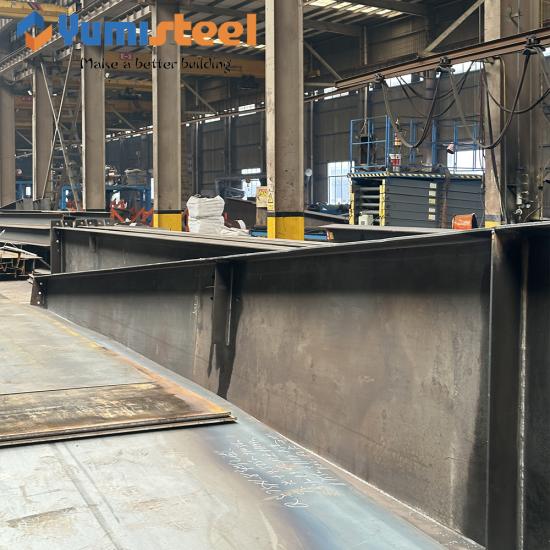
In steel structure manufacturing, cutting and blanking is the first and most critical process, its quality directly affecting subsequent assembly, welding, and overall structural accuracy. A standardized and efficient blanking process can not only improve material utilization but also reduce rework costs. This article, based on common process requirements, details the complete operational steps from layout to slag removal.

I. Layout and Blanking

The First Step of Precise Calculation

The core principle of layout and blanking is "use surplus materials first, then cut complete plates; cut large parts first, then nest smaller parts." Operators must strictly follow the drawings and process requirements for digital layout, paying particular attention to:

Leaving a 20mm allowance in the length direction of flange plates and web plates for subsequent assembly adjustments; cutting the width direction and other small materials (such as stiffening plates and connecting plates) to net dimensions without allowance.

Cutting is only permitted after the layout drawing is confirmed; arbitrarily changing the nesting order is strictly prohibited.

After cutting, the remaining sheet metal must be managed separately, clearly labeled with material, specifications, and residual material number for priority retrieval later.

II. Loading and Marking

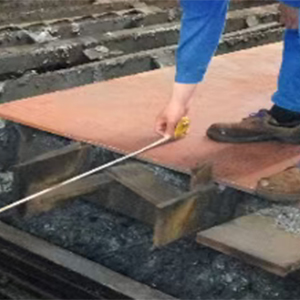
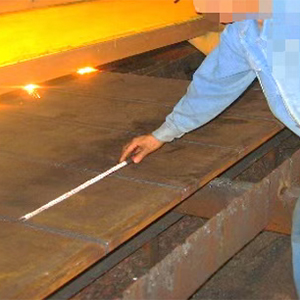
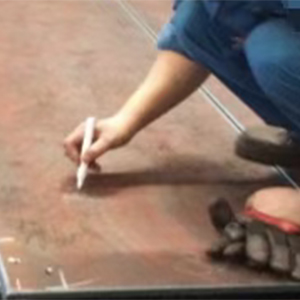
Smoothly hoist the steel plate onto the cutting platform, ensuring the surface is flat and free of severe rust or oil stains. Mark the cutting baseline, part outline, and necessary centering marks on the plate surface using a stone pencil or marking tool according to the layout drawing. Verify dimensions during marking to avoid errors or omissions.

III. Pre-cutting and Cutting Inspection

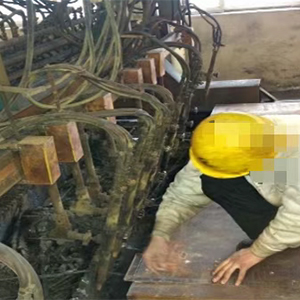
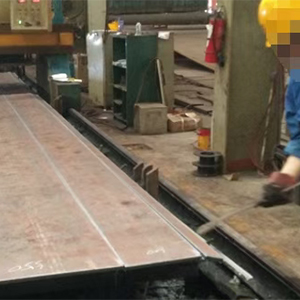
Before formal cutting, conduct a pre-cut (trial cut) to check if the nozzle flow rate, cutting speed, and flame (or plasma) parameters match the plate thickness. After pre-cutting a section, measure the kerf width and perpendicularity; continuous cutting can only proceed after confirming compliance with process requirements. During cutting, operators should constantly observe the slag flow and steel plate deformation to prevent warping due to excessive heat input.

IV. Marking and Slag Removal

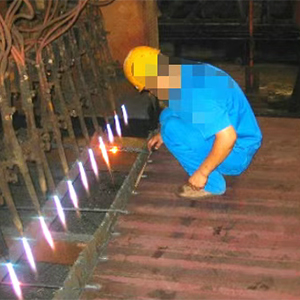
After cutting, immediately mark each part, typically using a steel stamp, marker, or label, indicating the project number, part number, material, and furnace batch number. The marking location should avoid the weld area and machined surfaces. Then, remove oxide slag, dross, and burrs from the cut edges using a slag hammer, angle grinder, or specialized slag removal equipment. Inspect the cut surface for cracks, missing edges, or other defects; grind and repair if necessary.

Feeding

Marking

Pre-cutting

Feeding

Marking

Pre-cutting

Cutting inspection

Marking

Slag removal

Cutting inspection

Marking

Slag removal

From meticulous planning during layout to material loading, marking, pre-cutting, cutting inspection, and finally marking and slag removal, every step reflects the rigor of steel structure production. Strictly adhering to the layout principle of "leftover material first, large material first, small material later," and standardizing the management of leftover material, while allowing a 20mm allowance for the length of the flanges and webs, are effective means to ensure subsequent assembly accuracy and reduce material costs. Only by properly controlling the cutting and material preparation can a solid foundation be laid for high-quality steel structure products.

For more information needed or any inquiry,please feel free to contact Yumisteel team.

伝言を残す
当社の製品に興味があり、詳細を知りたい場合は、ここにメッセージを残してください、できるだけ早く返信します。

建築および土木工事の先駆者

33

積年の経験

 
伝言を残す 伝言を残す
当社の製品に興味があり、詳細を知りたい場合は、ここにメッセージを残してください、できるだけ早く返信します。