
banner

業界ニュース

ホーム /ニュース /業界ニュース /

Design Guide for Profiled Steel Sheeting Composite Slabs

新製品

Design Guide for Profiled Steel Sheeting Composite Slabs

2026-06-16

Designing profiled steel sheeting composite slabs requires careful consideration of load capacity, fire resistance, and shear connection. This guide covers step-by-step methods for safe, efficient composite floor design. From deck selection to reinforcement detailing, you will learn industry best practices that ensure structural integrity and long-term durability.

Floor decking is divided into three generations

open-face floor decking, narrow-face floor decking, and closed-face floor decking.

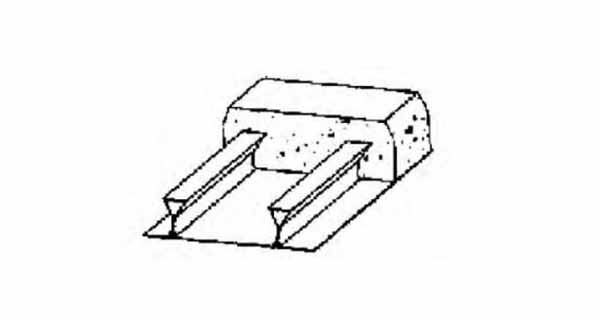
Narrow-mouth floor decking

Closed-mouth floor decking

Narrow-mouth floor decking

Closed-mouth floor decking

Smooth open-mouth floor decking

 Indented open-mouth floor decking

Smooth open-mouth floor decking

Indented open-mouth floor decking

First-generation open-face floor decking: This type of floor decking is only used as a permanent formwork for the floor slab and cannot work together with the concrete. Its stress analysis is complex. Therefore, this type of floor decking is only used as a permanent formwork during construction. After the concrete reaches 75% strength, the decking becomes useless. Budget departments have calculated that the overall cost of this type of floor decking in a project is 1.6 times that of cast in place construction. Including YXB76-305-915, YXB51-305-915, YXB75-200-600, YXB50-250-750, YXB35-125-750;
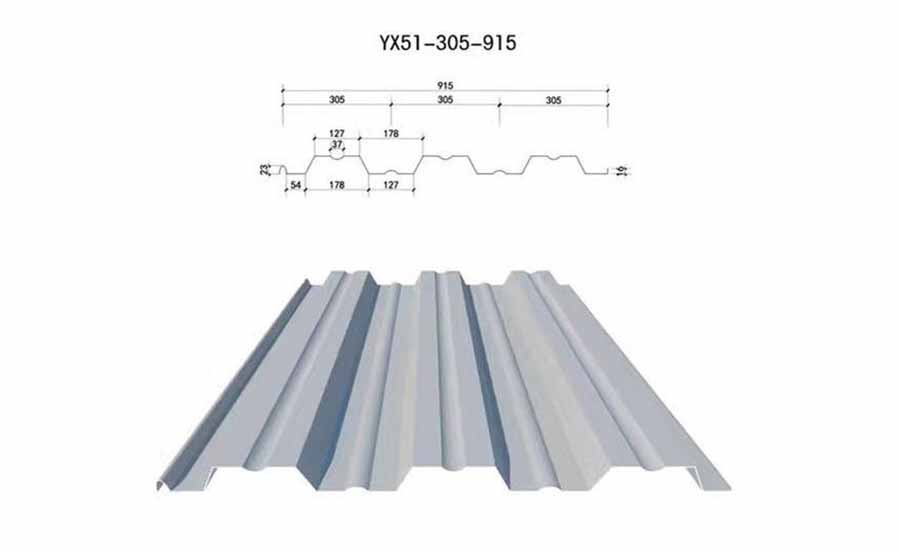
 First-generation open-face floor decking

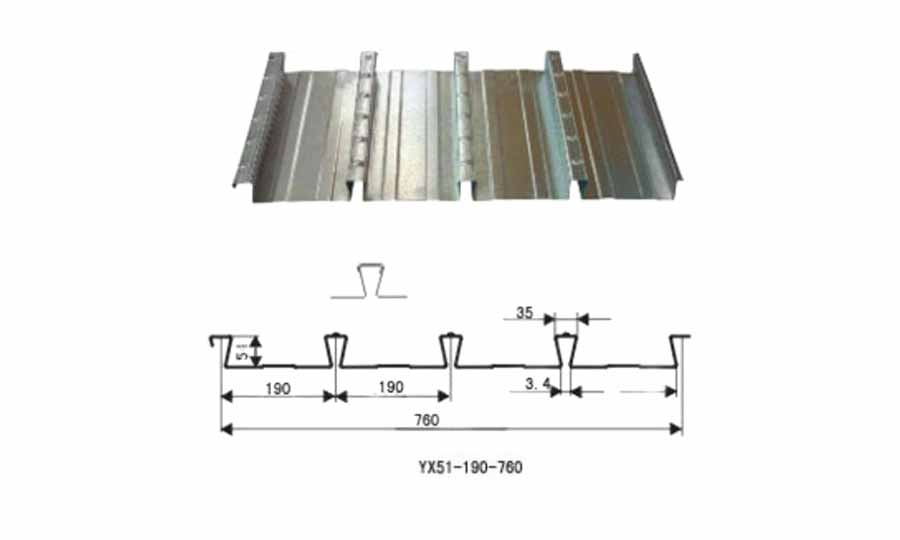
Second-generation dovetail decking: In this case, designers improved the slab shape by reducing the opening of the slab, i.e., dovetail decking. This type of slab not only works together with the concrete but also reduces the area weakened by the height of the concrete, greatly improving the fire resistance and corrosion resistance of the slab. The floor slab stiffness is also higher than that of open composite slabs. Including YXB51-190-760;

Second-generation dovetail decking

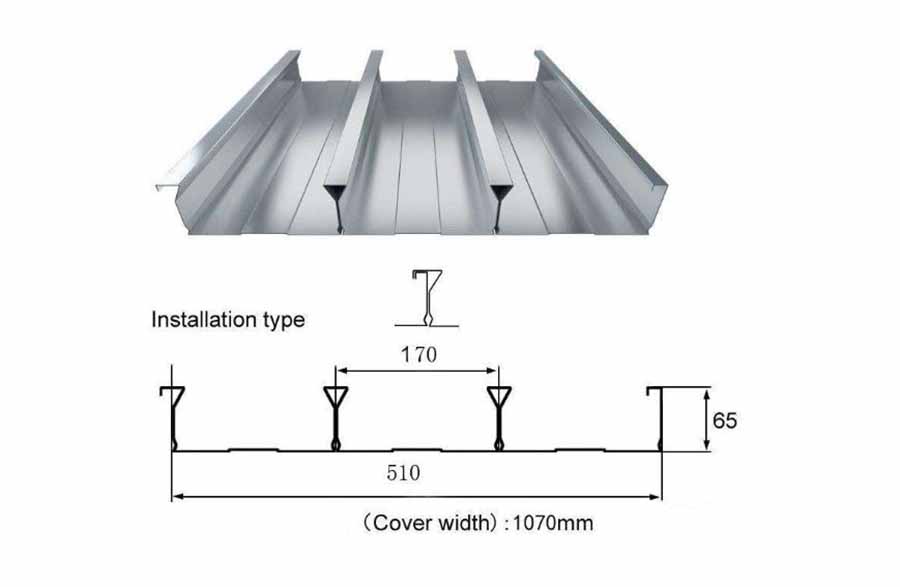
Closed-end decking: Considering the above issues, some designers added shear grooves to the surface of the original decking. Through the encapsulation of concrete, the two share the load, increasing the strength of the floor slab. This not only makes the decking and concrete a whole but also saves some tensile reinforcement. This significantly reduced project costs. Through improvements by designers, second-generation closed-end and narrow-end floor decking gradually replaced the first-generation open-end floor decking. These include models such as YXB65-185-555, YXB66-240-720, YXB65-170-510, YXB46-200-600, and YXB40-185-740.

Closed-end decking

In composite floor slabs made of profiled steel sheets, the connection between the profiled steel sheet and the concrete shall conform to one of the following forms:

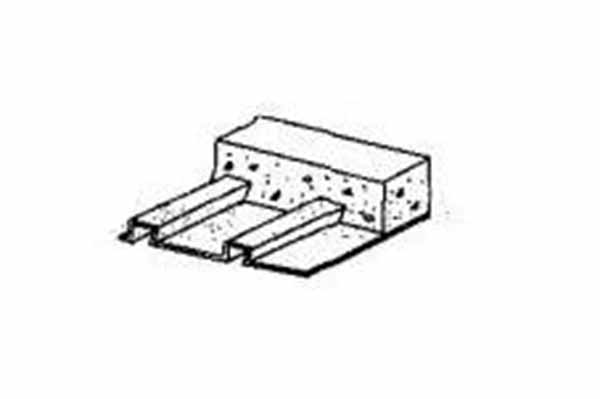
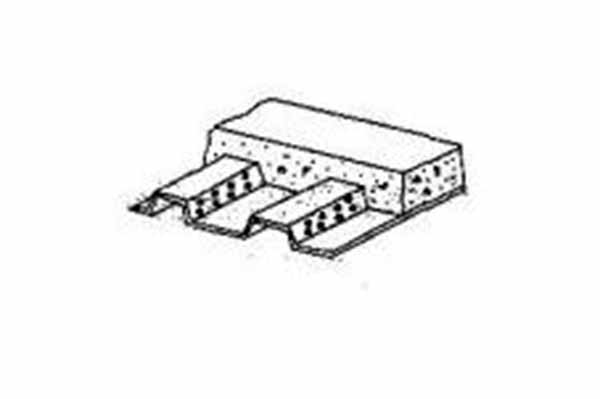
With the longitudinal grooves of the profiled steel sheet

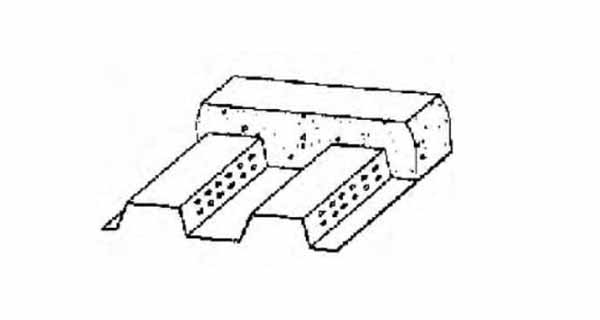
With indentations, small holes, or punched open openings on the profiled steel sheet

With the longitudinal grooves of the profiled steel sheet

 With indentations, small holes, or punched open openings on the profiled steel sheet

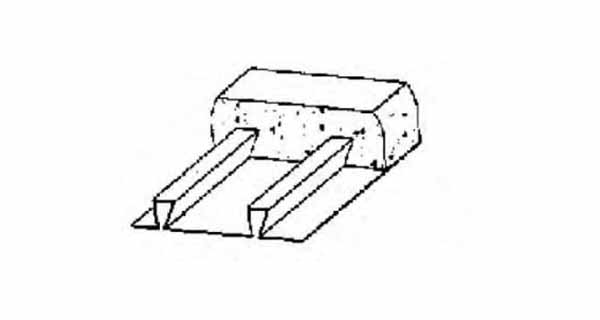
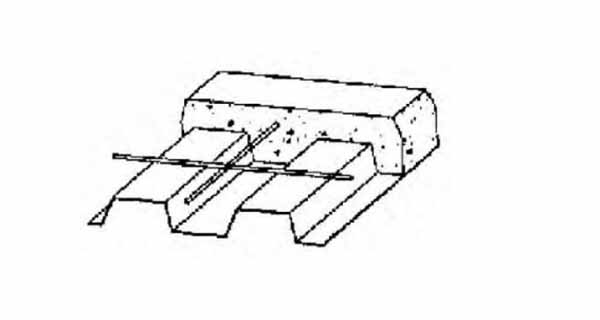
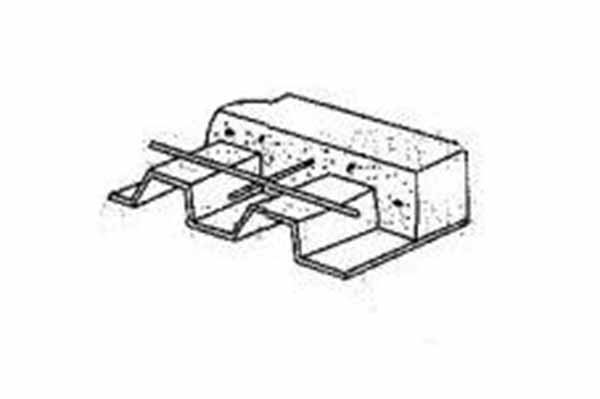
With the transverse reinforcing bars welded to the profiled steel sheet

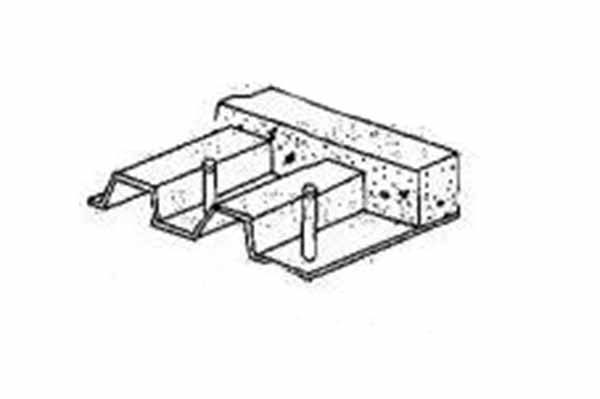
In any case, end anchors shall be provided

With the transverse reinforcing bars welded to the profiled steel sheet

In any case, end anchors shall be provided

The design of composite floor slabs and non-composite floor slabs (referring to profiled steel sheets used only as permanent formwork) shall meet the following requirements:

(1) The strength and deformation of the profiled steel sheet during the construction stage shall be verified: the influence of temporary supports shall be taken into account during the verification;

(2) After the concrete hardens, the cross-sectional bending capacity, shear capacity of the inclined section, and punching shear capacity of the composite floor slab during the service stage shall be verified. (3) Non-composite slabs can be designed using the conventional design methods for reinforced concrete floor slabs.

The flexural bearing capacity of the cross-section of composite slabs should be calculated using the plastic design method. In this case, it should be assumed that the materials in both the tension and compression zones of the cross-section have reached their design strength values. The design strength values of the profiled steel sheet and the design flexural compressive strength of the concrete should both be multiplied by a reduction factor of 0.8.

Mastering profiled steel sheeting composite slab design is essential for modern construction. By applying proper load calculations, fire protection, and shear transfer methods, engineers can create cost-effective, high-performance floors. Always follow local codes and manufacturer specifications to achieve safe, reliable, and long-lasting composite slab systems.

For more information needed or any inquiry,please feel free to contact Yumisteel team.

伝言を残す
当社の製品に興味があり、詳細を知りたい場合は、ここにメッセージを残してください、できるだけ早く返信します。

建築および土木工事の先駆者

33

積年の経験

 
伝言を残す 伝言を残す
当社の製品に興味があり、詳細を知りたい場合は、ここにメッセージを残してください、できるだけ早く返信します。