As the global construction industry transitions towards green and low-carbon practices, precast steel structures have become the mainstream choice for modern industrial and civil buildings due to their advantages such as rapid construction, recyclable materials, and superior seismic performance. However, the advantages of precast steel structures are not inherent but rather permeate the entire process, from detailed design and precision manufacturing to on-site installation. The treatment of every connection node and the quality of every weld directly determine the final safety and durability of the building. This article will delve into the key technical details that must be strictly controlled during the production and installation of precast steel structures.
The Production Process of Precast Steel Structures
The production of precast steel structures is the primary hurdle to ensuring the final quality of a building, and its core lies in the comprehensive control of materials, precision, and processes.
1. In the material selection and quality control stage, the strength, toughness, and corrosion resistance of the steel must strictly match the design requirements. At the same time, the quality of auxiliary materials such as welding materials and fasteners is equally crucial, requiring rigorous incoming inspection to ensure the stability and reliability of material performance from the source.
2. Regarding design and processing precision, the design scheme must consider the rationality, safety, and economy of the structure. During the production stage, meticulous processing must be carried out strictly according to the design drawings to ensure that the dimensions, angles, and hole positions of the components are controlled within standard tolerances. For complex irregular-shaped components, specialized processing plans and processes must be developed to ensure perfect interchangeability and assembly precision.
3. Welding and corrosion protection are key processes that determine the lifespan of components. In the welding process, welding methods and process parameters must be selected based on the characteristics of the base material, and the welding area must be protected during operation to prevent defects such as cracks and deformation. For corrosion protection, the material of the steel and the environment in which the building is located must be comprehensively considered to select a suitable coating system, constructing a long-term protective barrier for the steel structure and ensuring its safe use throughout its entire life cycle.
The Installation Process of Precast Steel Structures
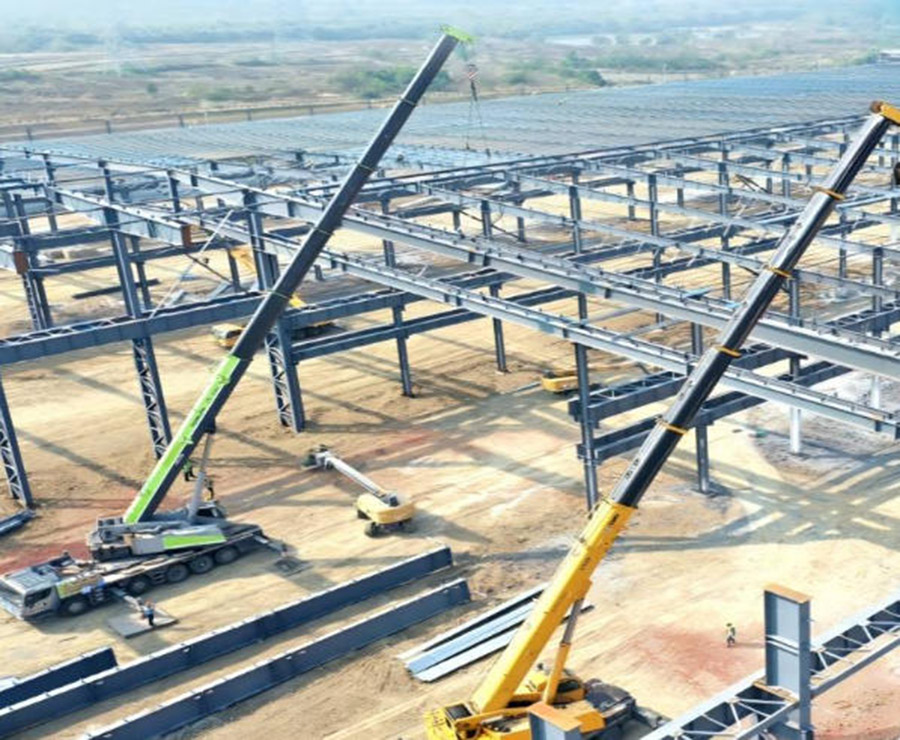
The installation of precast steel structures is a crucial step in transforming factory components into a stable building. Its core lies in precise foundation matching, safe hoisting operations, and seamless connection technology.
1. Foundation construction and acceptance are fundamental to ensuring the stability of the superstructure. Before foundation construction, a detailed geological survey must be conducted to select a suitable foundation type. After foundation construction is completed, rigorous strength and axis retesting and acceptance are required to ensure the accuracy of key data such as elevation and anchor bolt positions, laying a solid foundation for subsequent steel column hoisting.
2. In the component hoisting and installation phase, specialized equipment and an experienced team are essential. Before hoisting, appropriate machinery and lifting points must be selected based on the component's weight, center of gravity, and site conditions to ensure safe and stable handling and positioning. During installation, workers must strictly adhere to the specialized construction plan, correcting the verticality of each steel column and the horizontality of each beam to ensure accurate component axis positioning and secure temporary fixation.
3. Welding and bolting connections are core processes for ensuring the overall rigidity and stability of the structure. For high-strength bolt connections, the torque coefficient must be strictly controlled to ensure tight contact of the friction surfaces. For on-site welding, process parameters must be selected based on the plate thickness and joint type, and effective wind protection and preheating measures must be taken to prevent lamellar tearing or welding defects, ensuring the joint's structural safety.
4. Quality inspection and acceptance are crucial throughout the entire installation process. The installation unit must conduct comprehensive dimensional re-measurement, non-destructive testing of welds, and random checks of bolt torque on the completed structure. Any deviations or defects discovered must be rectified immediately until a re-inspection is passed. Only when the final acceptance confirms that the structure's verticality, overall elevation, and connection quality fully comply with design specifications can it be handed over to the next stage, ensuring the long-term safety of the entire building.
In conclusion, the production and installation of prefabricated steel structures is a highly specialized and systematic project, and its quality and safety depend on precise control of every minute detail. From the precision of component processing to the coordination of on-site hoisting, only by implementing strict operating procedures and a meticulous management philosophy, and ensuring that every process meets national standards and design requirements, can we truly realize the economic benefits and structural advantages of prefabricated steel structures, and safeguard the safety and durability of modern buildings.
For more information needed or any inquiry,please feel free to contact Yumisteel team.
オンラインサービス
+86-592-6095031
manager@yumisteel.com
Alina_Yuki
+8613559086380
+8615860744964